

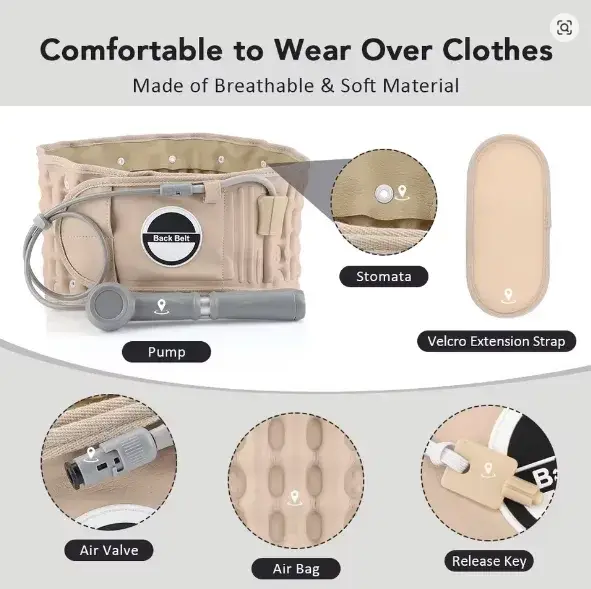
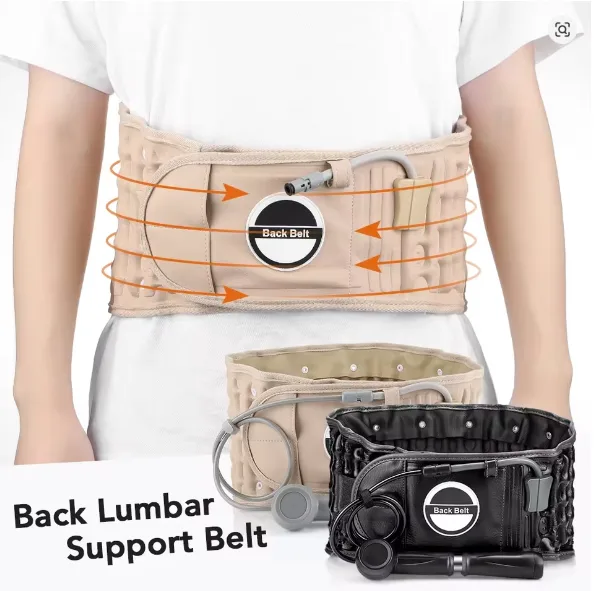
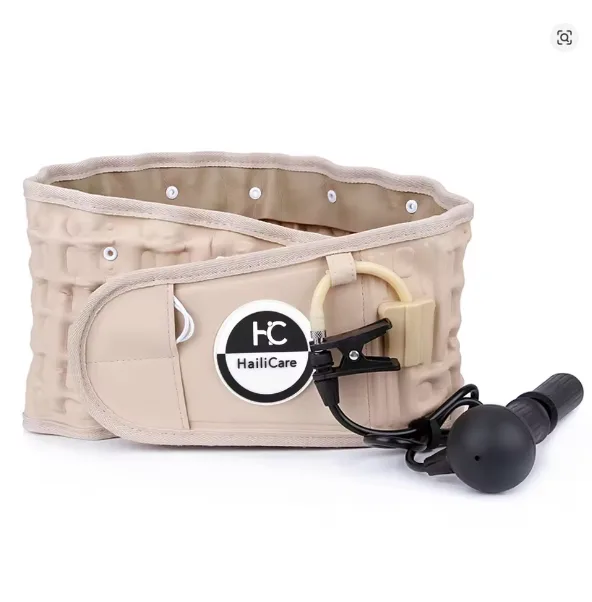
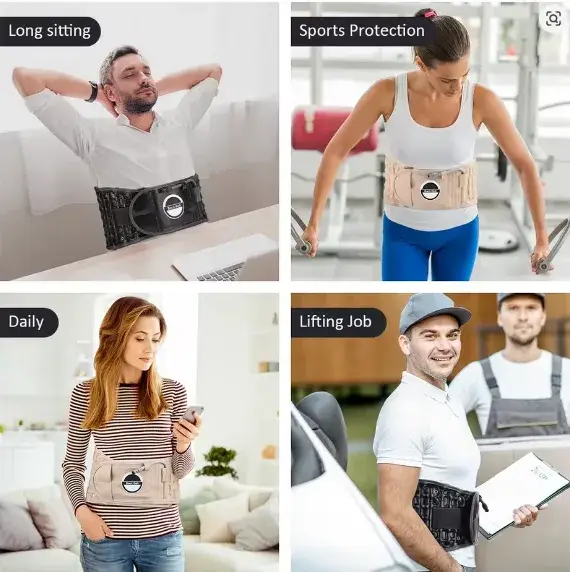
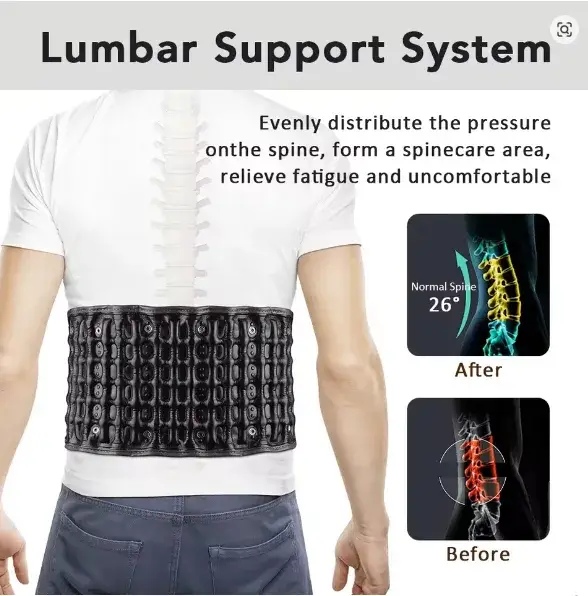
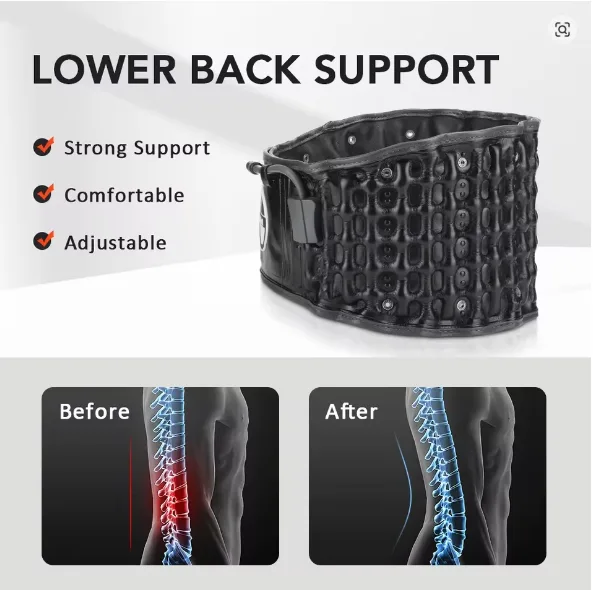
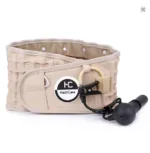

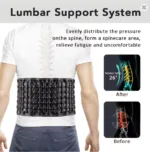
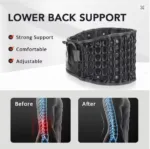
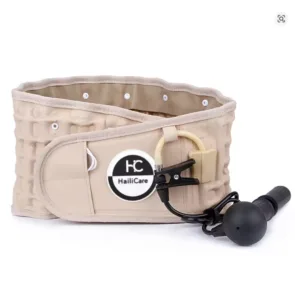
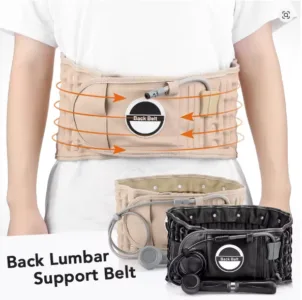
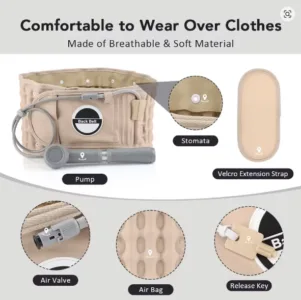
The Spinal Air Waist Belt is an inflatable lumbar support belt designed to support the lumbar spine and stabilize the back during daily activity. It uses an air pump to inflate air chambers, creating gentle Air Tration that increases space around the lumbar region and encourages a more natural posture. The belt wraps around the waist with an adjustable cord system for a secure fit, helping people manage pain symptoms linked with poor posture, long sitting, or heavy lifting.
This waist belt is commonly used as a supportive health care accessory for people who want non-invasive comfort at home, at work, or while traveling. It may also be used alongside treatment plans recommended by a doctor or healthcare provider, especially for people who experience back strain, neck pain from posture imbalance, or discomfort that may relate to spinal stenosis include pressure in the spinal canal.
Spinal Air Waist Belt: Inflatable Support for the Lumbar Spine
The Spinal Air Waist Belt is a practical belt that helps support the lumbar spine and reduce back pain symptoms caused by everyday posture challenges. It is built to fit around the waist and lower back, supporting the body part that often carries the most load during sitting, bending, and lifting. Its inflatable design uses an air pump to create controlled Air Tration, which may help relieve pressure by improving space and alignment in the lumbar region.
Why the Spine Needs Smart Support
The spine is a complex system made of vertebrae, bones, ligaments, and intervertebral disks that work together as the vertebral column (also called the spinal column). Inside this column sits the spinal cord, protected by dura mater and surrounded by cerebrospinal fluid within the subarachnoid space. The spinal canal and central canal protect a central pathway for spinal nerves and nerve roots. They carry signals between the brain and the upper and lower body through the nervous system.
Poor posture, injuries, and bone spurs can narrow the spinal canal and reduce available space. This crowding can irritate spinal nerves and nerve roots and may resemble spinal stenosis. Narrowing can reduce comfort and limit movement. It may affect the lumbar region, cervical spine, neck, or thoracic spine, depending on where it happens.
How Air Traction Works in a Waist Belt
This belt inflates to provide gentle decompression around the lumbar spine. It creates a supportive lift around the back and waist. This lift helps reduce strain on disks, facet joints, and the spinal column. Many people use it as a supportive option before considering surgery, especially when a clinic visit is not immediately available.

Supportive decompression can reduce irritation around spinal nerves and nearby structures such as the cauda equina. It may also ease pressure near the conus medullaris (around L1) in some lumbar patterns. While it does not replace treatment, it can complement a plan from a doctor or healthcare provider.
Nerves, Motor Control, and Daily Comfort
The spinal cord sends signals that control sensation and motor movement. It uses motor neurons (including lower motor neurons), neuronal axons, and cell bodies in grey matter and ventral horns. Major signal routes include the corticospinal tract, the spinocerebellar tract (including the ventral spinocerebellar tract), and the vestibulospinal tract. The anterolateral system also carries pain fibers. Sensory signals travel through the dorsal column–medial lemniscus pathway (DCML) using the nucleus cuneatus, gracile regions, and arcuate fibers. The cerebellum also helps process and fine-tune this sensory information.
Improved posture and strong body support often increase comfort while sitting and standing. This support also helps maintain the spine’s natural curves across the cervical segments and spinal cord segments.
Safe Use and Practical Guidance
- Use the air pump to inflate gradually until firm support is felt, not excessive pressure.
- Wear the belt during activities that aggravate pain, such as long driving or desk work.
- Stop use if symptoms worsen, or if numbness, severe pain, or neurological symptoms appear; consult a doctor.
- People with complex conditions (including cancer concerns, severe stenosis, or spinal cord injuries) should follow clinic guidance before use.
FAQ (Spinal Air Waist Belt)
What is the Spinal Air Waist Belt used for?
>>>>It is used to support the lumbar spine, improve posture, and help manage back pain symptoms by providing inflatable Air Tration and stabilization.
Can it help with spinal stenosis include lower back discomfort?
>>>>Some people use it for comfort when spinal canal space feels tight, but a healthcare provider should guide proper treatment decisions.
Is it a replacement for a Cleveland Clinic or Mayo Clinic evaluation?
>>>>No. It is a supportive health care tool and should not replace medical assessment at a clinic when symptoms are persistent or severe.
How tight should the belt be?
It should be snug around the waist with comfortable pressure; the air pump should not create sharp pain or numbness.
Can it be used for neck pain?
It mainly supports the lumbar region, but improved posture can sometimes reduce strain patterns that contribute to neck pain.








Reviews
Clear filtersThere are no reviews yet.